Ventilator from windscreen wiper parts
1 April 2020
Electrical switching & drive systems & components
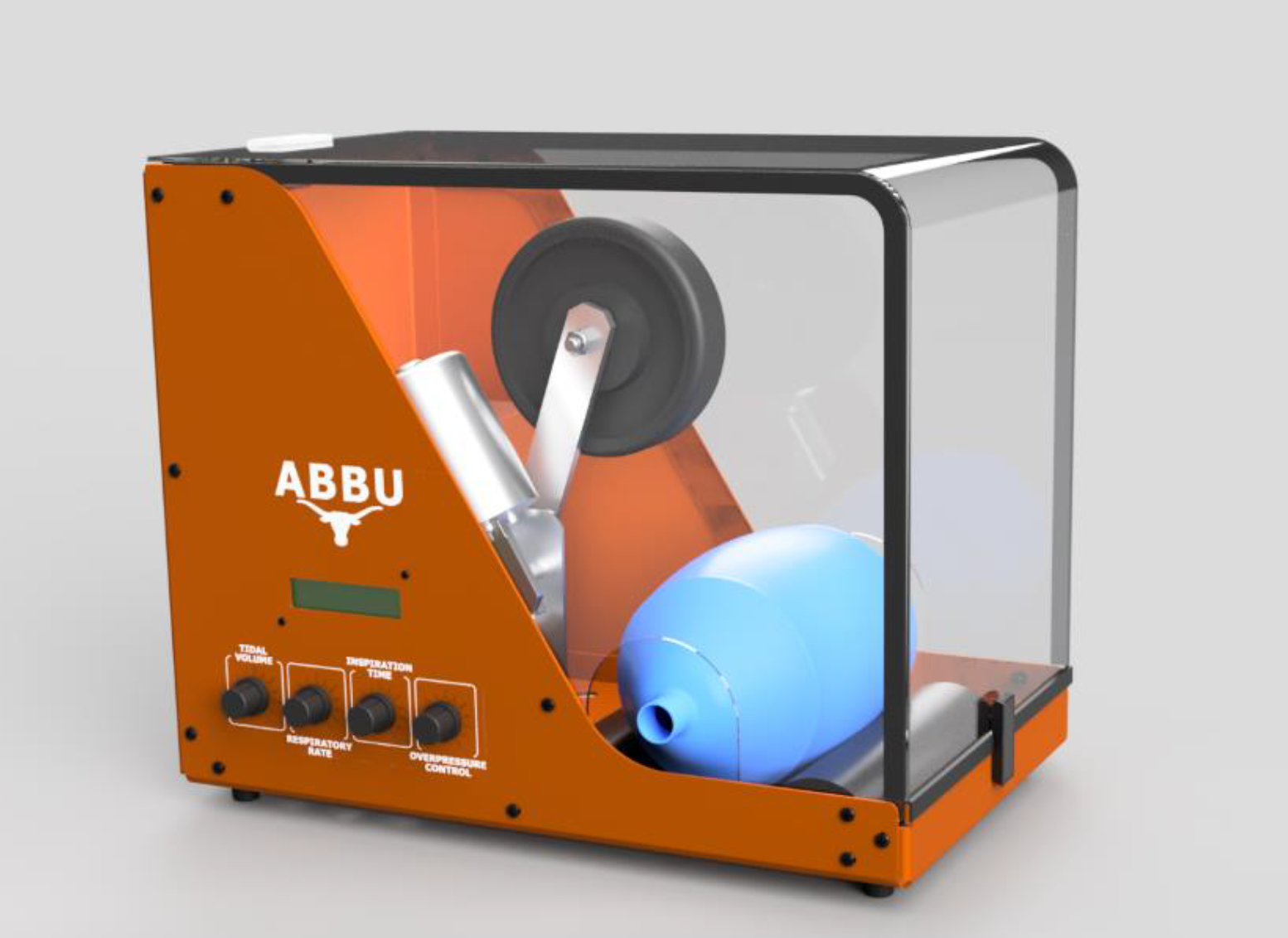
A research team at The University of Texas at Austin is building a ventilator made of cheap, widely available materials to help fill the demand created by the spread of COVID-19 for these critical devices that help patients breathe. Ventilators become necessary when patients cannot breathe on their own, physically pumping oxygen into their lungs, and they are in short supply. The researchers are building a ‘bridge ventilator’ that can be replicated and mass produced by others.
The device, called the Austin Bridge Breathing Unit, uses a manual resuscitator, a common handheld device with an artificial medical breathing unit (AMBU) bag. It fills up with oxygen to help patients breathe. However, a medical professional must repeatedly squeeze the bag to help patients inhale the oxygen − a challenge when medical personnel across the country are stretched thin due to the coronavirus.
The researchers needed a way to automatically compress the bag to get oxygen to patients, and they found it in a windscreen wiper motor pulled from a Toyota Camry. The team repurposed the motor to power a small caster wheel that pushes down on the bag to control oxygen flow. Four potentiometers control the respiration rate, the volume of oxygen given to patients, the time period to inhale and the maximum pressure.
The team came up with the idea to use the motor during a brainstorming session. The advantages of these motors are that they are available, reliable and inexpensive. They are extensively tested as part of the automobile production process. To quickly figure out the motor, the team worked with a local mechanic. The team is currently testing the prototype on a manikin from the university’s Dell Medical School and test lungs provided by UT Health San Antonio.
Once the prototype is checked, the researchers will provide an open licence to the design so anyone can make their own low-cost, reliable ventilator. Along with a team from Dell Medical School, they are also talking with several manufacturing partners about quickly building at least 2000 ventilators.
The device’s components are all regulated individually, so the team hopes approval can come in a matter of weeks rather than months. Just recently, the FDA issued an Emergency Use Authorisation protocol to speed production of ventilators and other respiratory devices.
“The problem is that when ICUs fill up, there are no more ventilators,” said Thomas Milner, a professor in the Department of Biomedical Engineering in the Cockrell School of Engineering, who is leading the project. “And you can’t bring in new ICU beds because you don’t have the ventilators. Essentially, we are replacing the human hand that would normally depress against the bag to inject oxygen into the patient’s lungs,” he said.
Further reading:
Magma X100 delivers AMB systems for wide range of industrial machinery
Electrical switching & drive systems & components
SpinDrive launches Magma X100 controller, bringing active magnetic bearing technology to a new generation of industrial applications. The Magma X100 expands SpinDrive’s oil-free, frictionless AMB technology to applications below 150 kW, unlocking new addressable markets.
Read more...
Mammoet completes major bridge replacement at Amsterdam Centraal Station
Electrical switching & drive systems & components
Mammoet completes the second of five major bridge replacements at Amsterdam Centraal Station, transporting steel deck sections by water to keep the station open throughout the works.
Read more...
Compressorless hydrogen turbine generates electricity using detonation waves
Electrical switching & drive systems & components
Researchers at the Karlsruhe Institute of Technology (KIT) have demonstrated a hydrogen gas turbine that generates electricity without a mechanical compressor.
Read more...
Why lubrication fails in mining and what to do about it
Editor's Choice Electrical switching & drive systems & components
Lubrication Engineers explains the recurring failure points behind mining lubrication problems and how the right product, storage and application practices can improve equipment reliability.
Read more...
Echain protects cables in cleanrooms
igus
Electrical switching & drive systems & components
Advanced polymer manufacturer igus has developed a new cleanroom energy chain with an innovative guide system that allows for abrasion-resistant travel over distances of up to 30 metres.
Read more...
PowerFlex drives cut energy use by up to 30% amid rising costs
Electrical switching & drive systems & components
Rockwell Automation’s PowerFlex 755TS variable frequency drives are delivering energy reductions of 10 to 30% in Africa’s industrial operations, with adaptive control and predictive maintenance features that cut downtime by up to 50%.
Read more...
Next-generation oil-free motor systems with active magnetic bearings
Electrical switching & drive systems & components
WEG and SpinDrive are collaborating to integrate SpinDrive’s AMBs and built-in IoT condition monitoring into WEG’s market-leading electric motor offering, creating an oil-free, maintenance-free drive solution.
Read more...
Direct drive with integrated control
Vepac Electronics
Electrical switching & drive systems & components
The PSD 40 direct drive is a mechatronic system with integrated control, bus interface and absolute measuring system, with no battery required.
Read more...
AI-powered on-premises analytics for industrial drives
Siemens South Africa
Electrical switching & drive systems & components
Siemens is introducing a new on-premises analytics solution for industrial drive systems. The software enables users to evaluate drive data entirely within their own infrastructure and meet stringent data-sovereignty requirements.
Read more...
Hydrostatic machine base for ultra-precision grinding centre
Electrical switching & drive systems & components
Hyprostatik Schönfeld has developed a high-precision hydrostatic machine base for a new ultra-precision grinding centre for Optotech. The machine platform enables a previously unattainable combination of dimensional accuracy, dynamics and surface quality in the ultra-precision grinding of optical surfaces.
Read more...










 printer friendly version