



Geothermal energy from the natural heat of the Earth is an inexhaustible resource, yet the growth of the global geothermal power sector lags behind other renewable energies, accounting for just 0,5% of installed renewable capacity. A Swiss startup, Borobotics, is hoping to speed this up with its innovative new electric-powered geothermal drilling robot, which can be used to fast-track and lower the cost of heat pump installations in confined spaces like city centers. The company has invented an autonomous drilling machine that will make harnessing geothermal energy less expensive and more accessible for everyone. It aims to meet the growing demand for geothermal heat pumps, which use a network of subterranean pipes to transfer heat from below the ground to a building on the surface.
Heating and cooling buildings accounts for half of global energy consumption, the majority of which comes from burning fossil fuels like natural gas. Because heat pumps use electricity instead of fossil fuels to transfer heat or cold air, they are up to three times more efficient than an equivalent gas boiler. To curb emissions, the EU has committed to installing 43 million new heat pumps between 2023 and 2030.
Geothermal no longer confined to volcanically active areas
The International Energy Agency has predicted that geothermal could account for up to 15% of global energy demand by 2050, up from just 1% today. Previously, geothermal projects were mainly situated in volcanically active regions like Iceland or New Zealand, where hot water bubbles at or near the surface. But the next wave of installations is likely to be led by startups like Borobotics using state-of-the-art technology that allows them to dig deeper and more efficiently.
Heat generation through geothermal energy is a key success factor for the heat transition. However, geothermal heat pumps are expensive. The production of the borehole for the geothermal probe is energy-intensive and inaccurate. It causes noise as well as massive landscape damage, and requires a lot of space. As a result, many buildings cannot benefit from geothermal heat. With a drilling robot located directly in the borehole, the above-mentioned disadvantages are eliminated. In particular, construction costs are drastically reduced due to the autonomous and energy-efficient mode of operation. The Borobotics technology platform can dramatically bring down the cost and complexity of shallow geothermal drilling.
Going shallow
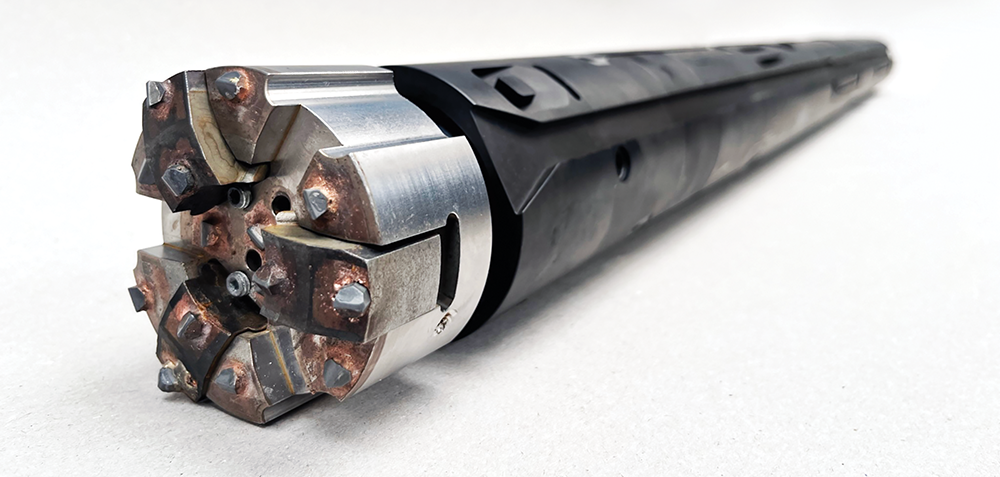
While most geothermal startups aim to produce utility-scale electricity by digging many kilometres below the Earth’s crust, Borobotics is going shallow. At just 13,5 cm wide and 2,8 metres long, the drill weighs less than 150 kg and replaces the massive 6 metre tall, 10 ton drills that are currently used. It is easy to install and uninstall with a single worker, and operates completely autonomously on 400 V – not diesel. While it drills, it tracks its every movement and steers itself downwards in a straight trajectory. Setting it up requires less that 8 m2 of space – less than a parking space, and 84% less than competing systems, which require 50 m2.
The robot’s system of fluid muscles allows it to move up and down the borehole as well as seal it in emergencies. A unique gearbox design coupled with two engines for rotation and hammering break down any type of rock. Sensors allow it to detect which type of material it is boring through. If it encounters water or methane on its way down, it automatically seals the borehole. In loose soil, it can create its own sheathing by automatically extruding a pipe to support the stability of the borehole. At less than 60 dbA, it drills 94% quieter than the competition. Once in the ground, it is barely audible. It tracks all its own movements, allowing for close placements of multiple boreholes. Being fully electric, it produces 86% fewer carbon emissions than diesel-powered alternatives.
The geothermal future
Founded in 2023, Borobotics is a young company that is just getting started. It has developed its second working prototype and is poised to build a business. It has just received its first major funding and expects to test the robot in real conditions early this year. The drilling robot is space-saving and very quiet. It is more efficient and consumes many times less energy than traditional drilling methods. With its ability to burrow silently just about anywhere, it could make geothermal a viable backyard energy source. It has the potential to revolutionise geothermal heat generation with a much milder form of harvesting energy from the Earth. This would be a big step closer to facilitating access to sustainable heat for buildings – a significant contribution to the heat transition.






© Technews Publishing (Pty) Ltd | All Rights Reserved

 printer friendly version