


Editor's Choice


Electric motors without magnets

Third Quarter 2021 Editor's Choice Electrical switching & drive systems & components

Magnets, typically using rare earth metals like neodymium, are found at the heart of most electric vehicle motors. It’s nice to have a permanent source of powerful rare earth magnetism in your rotor. The alternative is powered coils where electricity is transferred from the battery through to the coils in a spinning rotor. That means you’ll need a sliding point of contact and sliding points of contact develop wear and tear over time.

Permanent magnets, though, come with their own baggage. 97% of the world’s rare earth metal supply comes out of China and state control over such a crucial resource across a number of high-tech industries has been an issue in the past. China decided to restrict rare earth exports and the result was a 750% leap in neodymium prices and a 2000% leap in dysprosium prices.

Could these metals be produced elsewhere? Yes. They’re not as rare as the name might suggest. But wherever they’re mined, the only way to economically turn them into magnets is to send them to China for processing – nowhere else in the world is set up for the task and nobody can compete against China’s labour costs and environmental regulations.

Meanwhile several companies, including BMW, Audi, Renault and others, are already making at least some of their electric motors without magnets; everyone has their eye on new technology in this area. And now the German company Mahle has just announced a new electric motor that sounds like it solves a lot of problems in a very tidy manner.

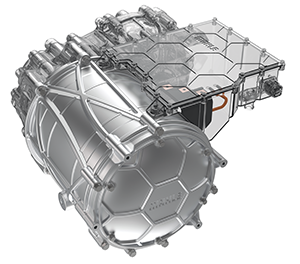
Mahle is currently developing a new kind of magnet-free electric motor that does not require rare earth elements. This not only makes production more environmentally compatible, but also brings advantages in terms of costs and resource security. The central feature of the new motor is the inductive and thus contactless power transmission. This allows the motor to operate wear free and efficiently at high speeds.

Mahle says the ability to tune and change the parameters of the rotor’s magnetism instead of being stuck with what a permanent magnet offers has allowed its engineers to achieve efficiencies above 95% right through the range of operating speeds – “a level that has only been achieved by Formula E racing cars.” The company has thus succeeded in combining the strengths of various electric motor concepts in one product. This new development is easily scalable, so it can be used in anything from subcompacts through to commercial vehicles.

“With our new electric motor, we’re living up to our responsibility as a sustainably operating company,” says Michael Frick, chairman and CFO of Mahle. “Dispensing with magnets and therefore the use of rare earth elements offers great potential, not only from a geopolitical perspective but also with regard to the responsible use of nature and resources.”

“Our magnet-free motor can certainly be described as a breakthrough because it provides several advantages that have not yet been combined in a product of this type,” says Dr Martin Berger, vice president of corporate research and advanced engineering. “As a result, we can offer our customers a product with outstanding efficiency at a comparatively low cost as the lack of expensive metals should make it cheaper to manufacture than typical permanent-magnet motors. The new traction motor from Mahle is highly efficient at almost all operating points and really demonstrates these advantages in segments where vehicles are mostly operated in real road traffic.”

The new electric motor is also characterised by a high degree of durability because the necessary transmission of electrical currents between the rotating and stationary parts inside the motor takes place without contact and is therefore wear free. This makes the engine maintenance free and suitable for a wide range of applications.

During its development, Mahle uses an innovative simulation process in which various motor designs are adjusted along different parameters until an optimum is found. This approach is significantly faster and cheaper than conventional processes. In this way, Mahle is helping to quickly create the necessary technical conditions in order to advance e-mobility in a sustainable manner worldwide.




Share this article:
Share via emailShare via LinkedInPrint this page

Further reading:

PC-based control for additive machine tools
Beckhoff Automation Editor's Choice Electrical switching & drive systems & components
IRPD is a specialist in additive machine tools. Development is heavily focused on high system throughput and consistently high process quality. This goal was achieved with the help of PC- and EtherCAT-based control and drive technology from Beckhoff.

Read more...
A guide to common hydraulic system contaminants
CT Hydraulics (Nqoba) Editor's Choice Hydraulic systems & components
Every engineer, machine designer and maintenance professional understands that the heart of any reliable hydraulic system is its fluid. But the moment that fluid is compromised, your system’s life expectancy and your peace of mind drop dramatically.

Read more...
Compressed air piping design
Artic Driers International Editor's Choice Pneumatic systems & components
When designing a compressed air pipeline, remember that size matters. The internal size of the pipe, along with the pressure and air volume, determine the velocity of the compressed air in the pipeline.

Read more...
Top questions about pressure gauges
SA Gauge Editor's Choice Pneumatic systems & components
Some questions never go out of date, and in our industry, a few have been asked for decades. At SA Gauge, we hear them every week. Here are the ten questions we hear most often, and the practical answers that can save time, money and frustration.

Read more...
A technological leap with the proportional valve terminal
Festo South Africa Editor's Choice
Festo continually makes bold technological leaps to keep pace with global advancements. Controlled Pneumatics is redefining the boundaries of compressed air technology to meet the demands of today’s most advanced applications.

Read more...
PC-based control optimises robotic parts handling on plastics machinery
Beckhoff Automation Editor's Choice
NEO is a cartesian robot developed by INAUTOM Robótica in Portugal for parts removal on plastics machinery. Its aim is to increase system productivity. NAUTOM Robótica has entered into a strategic partnership with Bresimar Automação to increase the working speed of the cartesian robots using advanced control and motion solutions from Beckhoff. The result is a comprehensive, future-proof automation solution for its entire family of cartesian robots.

Read more...
Heavy impact, smart control
Axiom Hydraulics Editor's Choice Hydraulic systems & components
Every now and then a project lands on your desk that’s equal parts heavy machinery and fine control - a tantalising mix for any engineer. A client approached Axiom Hydraulics with a project exactly like this.

Read more...
Driving fluid power forward
Editor's Choice
The National Fluid Power Association is developing its latest Industrial Technology Roadmap for 2025, showing how hydraulics and pneumatics are changing to meet new industrial demands.

Read more...
World’s hottest engine
Editor's Choice Electrical switching & drive systems & components
Scientists have built the world’s smallest engine. It’s also the world’s hottest. It could provide an unparalleled understanding of the laws of thermodynamics on a small scale, and provide the foundation for a new, efficient way to compute how proteins fold.

Read more...
Reinventing the wheel
Editor's Choice Electrical switching & drive systems & components
Once a curiosity in the early automotive age, in-wheel motors are now re-emerging with real promise. From electric cars to commercial vehicles and even aircraft, they are on the verge of transforming transportation engineering.

Read more...


While every effort has been made to ensure the accuracy of the information contained herein, the publisher and its agents cannot be held responsible for any errors contained, or any loss incurred as a result. Articles published do not necessarily reflect the views of the publishers. The editor reserves the right to alter or cut copy. Articles submitted are deemed to have been cleared for publication. Advertisements and company contact details are published as provided by the advertiser. Technews Publishing (Pty) Ltd cannot be held responsible for the accuracy or veracity of supplied material.


© Technews Publishing (Pty) Ltd | All Rights Reserved