



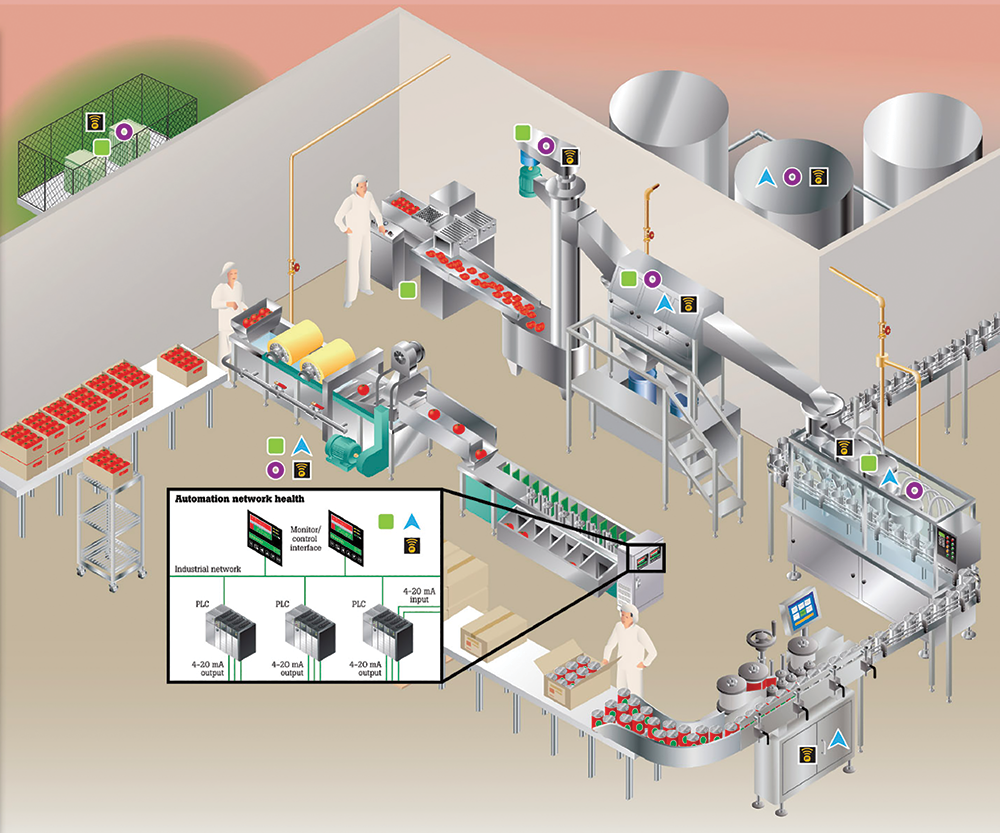
Moving or reconfiguring a production line can disrupt a complex and finely tuned system. When a line is moved, electrical distribution systems, variable frequency drives (VFDs), programmable logic controllers (PLCs), lighting, communication circuitry, controls and emergency stop systems are susceptible to unanticipated changes ranging from glitches to outright failures. Glitches and failures at the unit level can in turn cause failures at the system level, such as unexpected tripping of conveyor drive systems, failures of the plant floor communication system, equipment overheating, unsafe electrical systems − and lots of headaches and downtime.
Problems instigated by a move may not be immediately visible when a line is returned to service. In fact, symptoms of potentially serious problems may appear long after installation and setup are complete. These potential problems may crop up:
• Motors are noisy or burn out prematurely.
• Equipment shuts down for unclear reasons.
• Sensors and detectors do not function properly.
• Operator complains of ergonomic problems.
Outsourcing electrical work is not a panacea
Because electricians and other maintenance personnel are often fully occupied just keeping the facility operating, electrical work for production line moves is often outsourced. While one can usually rely on electrical contractors to follow the requirements of the National Electrical Code for all of the electrical work they do, bear in mind that the code does not require a contractor to address many of the less obvious and frequently overlooked problems, such as voltage drops, harmonics, and electromagnetic interference (EMI).
The contractor’s job is to provide an electrical installation “essentially free from hazards but not necessarily efficient, convenient or adequate for good service or future expansion of electrical use” according to Article 90 of the National Electrical Code. Unless one has made contractual provisions to upsize conductors, use cable specifically designed for VFDs when needed, and the like, one should not rely on the electrical contractor to anticipate and solve many of the subtler issues that may arise, or to plan for future control and equipment concerns or enhancement.
What needs to be done?
Many of the things that need to happen when moving or reconfiguring a production line are obvious:
• Design the new layout.
• Schedule and coordinate each step of the process.
• Calculate costs.
• Disconnect, move and re-rig equipment.
• Reroute wiring.
• Reinstall and reconnect equipment.
• Start up, test and troubleshoot the reconfigured line.
Here are some less obvious requirements for a new or reconfigured setup:
• Find and correct any EMI problems.
• Replace worn out and outdated equipment and upgrade equipment where it makes sense to do so.
• Ensure motor drive systems are delivering clean power free of harmonics and at the right voltage after the move.
A nine-step electrical system checklist for moving a production line
When engineering is busy getting the production line laid out and operating, the project manager is focused on staying on schedule, and maintenance is tied up keeping the rest of the plant’s equipment running, how does one ensure the new electrical installation will work safely and correctly when it is brought back online? How can one ensure upgrade and replacement opportunities are realised? Try using a checklist. It can serve as a map, an agreement about what has to be done (and when and how), and a memory aid to make sure everything gets done. At a minimum, a checklist should address:
• Safety.
• Power quality.
• Voltage drop and voltage unbalance.
• VFD-related concerns.
• Grounding.
• Power and control wiring.
• Additional items peculiar to the industry, processes, goals and requirements.
There is a nine-step checklist which can be used as a starting point to help plan the production line move, to keep it on track, to realise the opportunities for replacements and upgrades, and to help troubleshoot when the move is done.
Product: https://bit.ly/3OlMQeb
| Tel: | +27 10 595 1824 |
| Email: | [email protected] |
| www: | www.comtest.co.za |
| Articles: | More information and articles about Comtest |






© Technews Publishing (Pty) Ltd | All Rights Reserved

 printer friendly version