


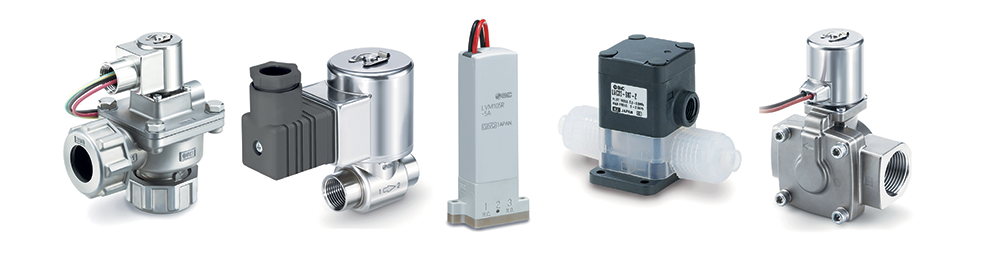
Little consideration is generally given to two-port valves, because they are often perceived as simple devices that only open and close to control downstream fluid supply. Although this is mechanically true, choosing the optimal two-port valve for your application can make a big difference, saving space, weight and energy consumption (up to 63% in some cases).
To optimise the selection of a two-port valve, you must first consider the specific application and fluid type. In general purpose industrial applications, contact between the valve’s internal moving parts and the fluid is not particularly critical. However, environmental resistance is very important, as valves could be installed in high-humidity environments. In such instances, a valve such as SMC’s JSX series and its stainless steel coil and body are ideal.
Bring benefits to life
In the medical and pharmaceutical manufacturing sectors, it is necessary to avoid fluid contamination, which is why you should select valves that feature an isolated structure and plastic materials. These two-port valves must also have low particle generation, and small internal and dead volume.
Chemical applications also have their own set of criteria that influence the selection of two-port valves. Fluids deployed in these applications can be very aggressive, so chemical compatibility becomes critical. Valve construction must therefore centre on the use of materials that provide high corrosion resistance, like PTFE or super PFA. The reduction of micro-bubble generation, fluid contamination and leakage are further critical factors for this type of application.
As a final example, dust collector applications in sectors like food and cement, require valves with high peak pressure capability, which aids element cleaning efficiency. The cleaning of dust collectors typically takes place using air, supported by tank-mounted valves. Therefore, using valves with lower air consumption can help to reduce the size of the air tank and cut manufacturing costs due to less material use.
All in good time
Valves with higher output peak pressure and low air consumption allow a reduction in tank size, helping to minimise cycle times. The tanks in dust collector applications usually feature multiple valves which energise in sequence. A higher output peak pressure means better cleaning efficiency of the element, making it possible to reduce the energisation time of the valves. The effect of this reduction is a lower pressure drop in the tank. Combined with a smaller tank size, this makes it faster to return the tank to full operating pressure. It may be just a few milliseconds, but some applications require dozens of valves, so reducing your total cleaning time can prove highly beneficial in the long term, as it becomes possible to complete more cleaning cycles in a day. As a further benefit, every element cleaning cycle leads to less clogging, helping to extend element lifetime, reduce maintenance requirements, and increase productivity.
With the application determining your valve type, it’s time to start scrutinising additional parameters like flow rate, pressure differential, orifice size, valve size, body and rubber materials, and certifications. Correct valve selection not only impacts the equipment manufacturer, but also the end user. For instance, although selecting the most compact valve size potentially helps to reduce equipment size and weight, selecting a valve with lower power consumption ensures the equipment is more energy efficient.
Wash away inefficiency
Let’s examine a case in point: an industrial washing machine. Space for equipment is decreasing around the world. The obvious way to reduce the size of appliances is to use smaller components that offer the same performance as larger counterparts. In two-port valves, this concept translates into more compact designs, with high flow rate and pressure differential specifications.
Two SMC two-port valves, for example SMC’s JSX series and JSXU energy saving series, demonstrate the gains possible from astute selection. While both valves offer the same flow rate (Kv 0,45) and pressure differential (1 MPa), the JSXU model is around 10% smaller and 24% lighter. However, the biggest difference relates to power consumption, with the JSXU delivering savings of up to 63% by reducing the wattage required to hold the valve.
If OEMs can deliver on customer demands for compact size and energy efficiency, it helps to generate brand loyalty and build a more robust business model for long-term success. If you’ve been taking your two-port valve selection for granted, maybe it’s time to think again and tap into the benefits available from SMC for more effective product choices.
| Tel: | +27 11 100 5866 |
| Email: | [email protected] |
| www: | www.smcza.co.za |
| Articles: | More information and articles about SMC Corporation South Africa |






© Technews Publishing (Pty) Ltd | All Rights Reserved

 printer friendly version