



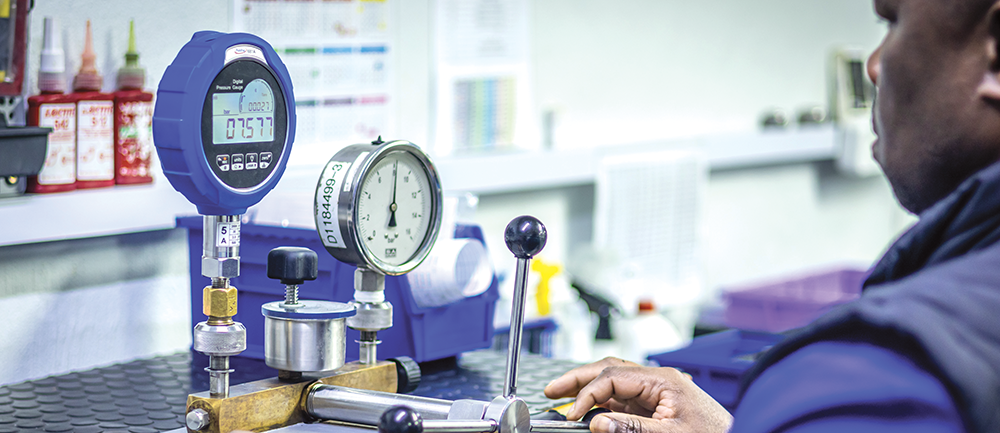
With so much focus on digital systems, remote monitoring and automation, it’s easy to assume that traditional analogue gauges are outdated. Yet in almost any plant, mine or processing facility, you’ll still find them in daily use. And there’s a good reason for this, analogue pressure and temperature gauges remain among the most reliable, practical and cost-effective instruments available. They’ve earned their place through simplicity, resilience and an ability to tell the truth at a glance, with no power, passwords or software updates required.
Built on proven principles
Whether a Bourdon tube, diaphragm or bimetal coil, the working parts of a mechanical gauge haven’t changed much in a century. The design is robust and predictable, making them invaluable in real-world conditions with dust, vibration, moisture or heat where electronics can fail. For many technicians, it’s still the first instrument they check when something seems off.
The digital push
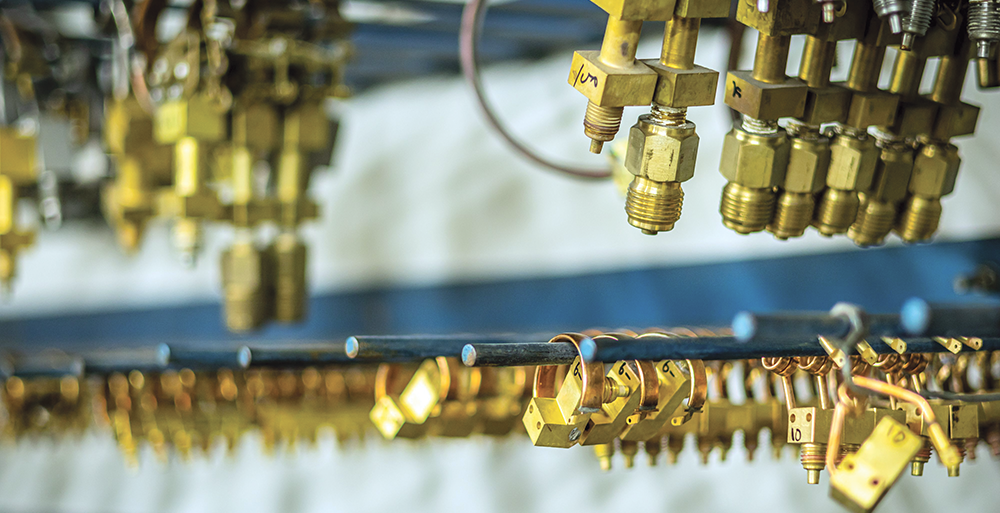
Modern industry relies heavily on digital transmitters, PLCs and smart sensors for continuous monitoring, data logging and centralised control. But digital isn’t infallible. Sensors can drift, lose calibration or suffer interference. Power cuts, wiring faults and communication errors occur more often than we like to admit. When they do, engineers still turn to the nearest analogue gauge to confirm what’s really happening. Rather than being replaced, mechanical instruments have become the trusted reference point for digital systems, the quick visual check that everyone believes before making adjustments.
Where analogue still outperforms
There are several areas where analogue gauges hold clear advantages over electronic instruments:
• Instant clarity: An analogue dial gives an immediate visual cue. You can see at a glance whether you’re in the safe, caution or danger zone.
• No power required: Analogue gauges are self-contained. They don’t rely on power, batteries or networks. During loadshedding or shutdowns, they keep working.
• Tough under pressure: Mechanical gauges handle vibration, shock and extreme temperatures. A stainless steel, liquid-filled model keeps performing long after electronics fail.
• Affordable and long-lasting: Once fitted, a gauge needs little maintenance and can last for years. When local indication is all that’s needed, there’s no reason to over-complicate things.
• Checks and balances: Analogue gauges provide an independent backup for digital sensors. When transmitters report odd data, the gauge confirms whether it’s a real problem or just a signal issue, a simple, but vital, layer of safety.
Working together, not competing
Digital and analogue instruments each have strengths. The smartest systems use both. A transmitter feeds continuous data to a control room, while the analogue gauge beside it gives operators a quick visual check in the field. If something looks wrong, they can see it instantly and respond.

Value across the lifecycle
A key advantage of analogue gauges is low lifetime cost. There’s no software to maintain, no firmware to update and no special tools required. With protection such as snubbers, isolators or thermowells, a gauge can serve for a decade or more. Even in high-tech plants, analogue gauges confirm readings and identify problems before they escalate.
A real-world example
At a mine in the Northern Cape, a new automated control system was installed to manage pressure and flow across several process lines. Soon after startup, operators noticed fluctuating pressure readings on their digital display. The analogue gauges, however, showed everything was stable. The issue was traced to electrical interference affecting one transmitter. Without those mechanical gauges, the plant might have wasted hours chasing a fault that didn’t exist, or even shut down production. This example shows why analogue still earns its place. When digital says something’s wrong, the gauge either confirms it or keeps everyone calm.
A balanced future
Digital technology has transformed measurement and control, but that doesn’t make mechanical instruments obsolete, it makes them complementary. Analogue gauges provide immediate assurance, durability and independence, qualities still vital for safety and uptime. Many modern versions combine both worlds, featuring dual analogue/digital displays or transmitters with a local dial. The goal isn’t to choose one or the other, but to use both intelligently.
Conclusion
The analogue gauge may be one of the oldest instruments in the plant, but it remains one of the most trusted. In a world dependent on electronics, it’s reassuring to have a device that needs no power, speaks no code and tells the truth instantly. As South African industry continues to modernise, analogue gauges will keep doing what they’ve always done, providing clear, reliable information right where it’s needed.
| Tel: | +27 11 021 8082 |
| Email: | [email protected] |
| www: | www.sagauge.com |
| Articles: | More information and articles about SA Gauge |






© Technews Publishing (Pty) Ltd | All Rights Reserved

 printer friendly version