



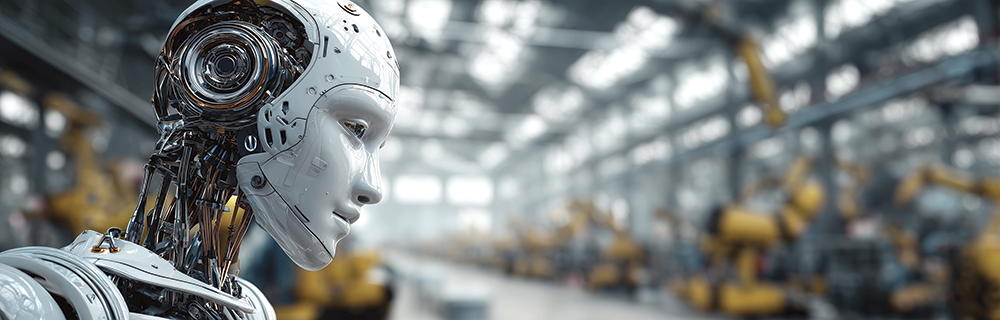
According to the new IDTechEx report ‘Humanoid Robots 2026-2036: Technologies, Markets and Opportunities’, the humanoid robot industry is entering an early commercialisation phase, with adoption expected to scale first in industrial environments before expanding into broader commercial and consumer markets. IDTechEx forecasts the global humanoid robot market will reach approximately $29,5 billion by 2036, driven by increasing deployments in automotive manufacturing and logistics, alongside ongoing progress in component scaling and platform reliability.
Automotive manufacturing is the first scalable deployment market
IDTechEx expects automotive manufacturing to be the first sector where humanoid robots scale in meaningful volumes. Compared with open-world environments, automotive plants offer controlled operating conditions, structured workflows and clearer ROI justification for repetitive labour-intensive tasks. Early deployments are focused on relatively simple but scalable tasks such as material handling, inspection support, intra-factory transport and basic assembly assistance. As the market transitions beyond proof-of-concept demonstrations, commercialisation is increasingly being defined less by general-purpose capability and more by reliability, safety validation, maintainability and predictable uptime.
A key reason automotive manufacturing is emerging as the first scalable deployment market is that many of the most active investors and strategic backers are automotive OEMs themselves. Unlike traditional industrial automation buyers, automotive OEMs have both the capital base and long-term incentive to accelerate humanoid development, particularly as they face rising labour costs, tightening workforce availability and increasing pressure to improve manufacturing flexibility.
OEM-backed investment also provides immediate access to controlled production environments, engineering validation resources and real operational datasets that are difficult for startups to obtain independently. In practice, this allows humanoid platforms to iterate faster through reliability testing, safety validation workflows and maintainability optimisation. OEM involvement also increases the likelihood of scaled procurement once a platform meets minimum performance thresholds, reducing go-to-market uncertainty and accelerating supply chain readiness.
Logistics and warehousing
Following automotive, logistics and warehousing are expected to become the second major commercialisation pathway. However, growth in this segment is likely to be shaped by competition with existing automation technologies such as autonomous mobile robots, automated guided vehicles and robotic arms, which already offer mature cost-performance advantages in many warehouse environments.
Despite this, humanoid robots are increasingly positioned as a flexible automation solution where mixed and unpredictable tasks must be completed in facilities designed around human workers. As hardware cost declines and task performance improves, humanoids may become commercially attractive for workflows such as pick-and-place, parcel handling and repetitive sorting operations, particularly in environments where deploying fixed automation would require high capital investment and major infrastructure redesign.
In practice, logistics adoption will depend on whether humanoid platforms can demonstrate consistent task completion rates, robust safety performance around human workers and cost-effective deployment at scale. This creates a strong incentive for suppliers to prioritise durable mechanical design, improved dexterity and faster servicing cycles.
Home-use humanoids
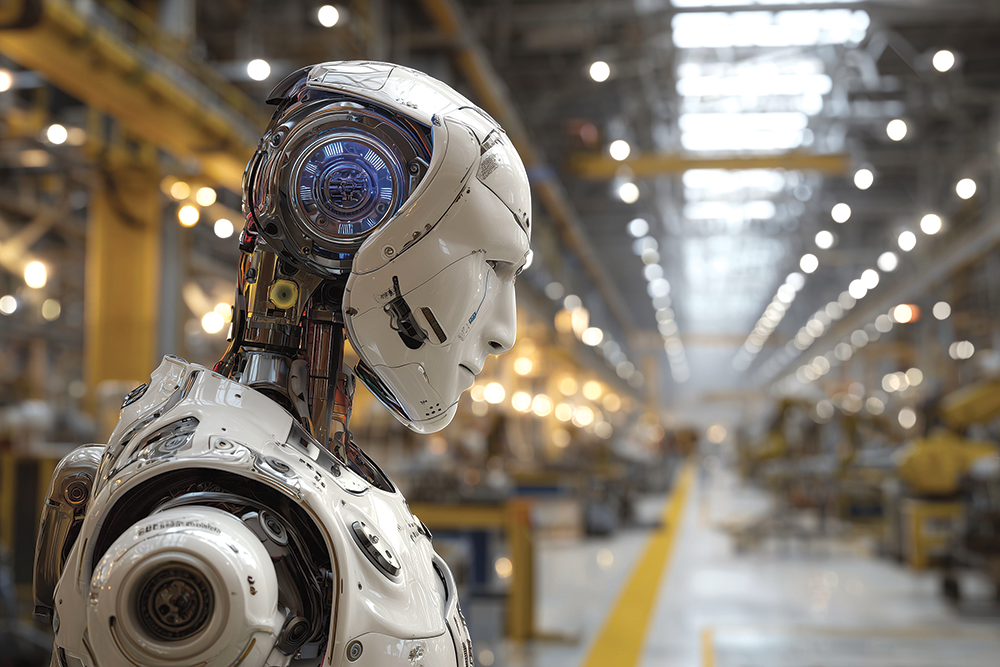
While home-use humanoid robots represent one of the most widely discussed future markets, IDTechEx expects meaningful consumer commercialisation to remain a longer-term opportunity. In practice, home deployment is likely to emerge only after 2030 once key barriers around safety validation, reliability, affordability and real-world autonomy are addressed.
IDTechEx further expects volume scale-up in home-use humanoids to occur beyond 2035 as platform reliability, safety validation and real-world autonomy mature to a level suitable for unstructured domestic environments. While cost-down is expected to progress significantly before 2030, the key barrier for home adoption is more likely to be long-tail scenario coverage and the availability of sufficient real-world datasets to support robust embodied AI performance at scale.
This delayed timeline is similar to the commercialisation trajectory seen in robotaxis. While controlled industrial environments allow faster validation and repeatable workflows, home-use deployment introduces significantly higher variability and a much larger long-tail of edge cases.
Household environments are unstructured, unpredictable and highly diverse across regions and user behaviours, meaning humanoid platforms require substantially more real-world operating data to train, validate and continuously refine their embodied AI models. As a result, the home-use market is expected to lag industrial adoption by several years, with commercialisation emerging after 2030 and volume more likely scaling beyond 2035.
Component bottlenecks will define the speed of commercial scale-up
Despite accelerating market momentum, humanoid robots still face major engineering and manufacturing constraints. IDTechEx highlights component-level bottlenecks as one of the key factors that will shape commercialisation speed. Battery energy density and thermal management remain major limitations, restricting operating time and increasing downtime. At the same time, scaling high-precision components such as screws, bearings and high-performance actuators remains challenging, as supply chains are not yet optimised for high-volume humanoid production.
Dexterous hands and tactile sensing also remain critical hurdles for expanding humanoid task capability beyond basic industrial operations. In many current deployments, humanoids remain best suited to tasks that do not require advanced manipulation, fine grip control or human-level perception of contact forces. As tactile sensing maturity improves and integration becomes more standardised, humanoids may unlock more complex task profiles across both industrial and longer-term consumer markets.
For more information contact Charlotte Martin, IDTechEx,






© Technews Publishing (Pty) Ltd | All Rights Reserved

 printer friendly version