



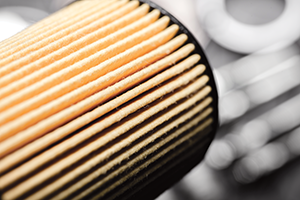
Filtration is often treated as a consumable in maintenance budgets, while in practice, it is far more than that. In fuel, hydraulic and lubrication systems, fluid cleanliness has a direct influence on reliability, control, stability, service life and operating cost. Across southern Africa’s mining, transportation and industrial sectors, this becomes increasingly important as equipment is routinely exposed to dust, heat, variable duty cycles, long service intervals and remote operating conditions.
This article highlights the importance of filtration in motion control systems, how contamination affects performance and what fleet managers, operators and maintenance teams in southern Africa can do to reduce downtime, avoidable wear and costly repairs. It also shows how Baldwin Filters, located in Cape Town, can be your regional specialist filtration partner to keep you moving.
Filtration as a critical part of motion control performance
In motion control systems, the focus is typically on pumps, valves, injectors, cylinders, actuators, drives, and electronic control hardware. These components depend on the condition of the fluid circulating through the system.
In hydraulic systems, the fluid is not limited as a medium to transfer power. It also is a lubricant, a heat transfer medium, and in many applications, a contributor to precise control. In lubrication systems, oil cleanliness directly correlates with wear rates, oil life and the protection of bearing and other moving parts under load.
At the heart of your operation, the fuel system is what keeps you productive. Fuel powers your operation and is the largest continuous operating cost. Poor fuel quality reduces the lubricating ability of fuel and increases wear on critical engine components, decreasing your fuel efficiency, and in severe cases, bringing your operation to a halt. A small amount of dirt, moisture or wear debris can progressively affect multiple components, shifting stable operation to erratic performance, loss of efficiency and ultimate failure.
System reliability is closely linked to contamination control. The cost of a filter element is relatively inexpensive when compared to a pump, servo, valve, injector or actuator assembly, but its role in protecting these components is disproportionally important.
Filtration to enhance reliability
In a well-managed system, filtration helps remove harmful particles, supports fluid integrity, and reduces the likelihood that contaminants will circulate long enough to damage critical surfaces or components. It affects component life; fluid and fuel life; combustion efficiency; heat generation; response consistency; control accuracy; maintenance intervals; and the total cost of ownership.
This is particularly relevant in southern Africa where many machines and fixed-plant systems operate in challenging conditions and where unplanned downtime can carry significant cost. In sectors such as mining and off-highway transport, a fluid or fuel related fault can interrupt production, delay service schedules and increase safety risk.
From maintenance item to performance strategy
One reason why filtration is often underestimated is that damage is often gradual. A machine may continue to operate while pumps wear, valve clearances degrade or oil quality declines. By the time symptoms become obvious, the true cause may be obscured by multiple secondary failures.
This is why leading operators increasingly treat filtration as part of a wider reliability strategy rather than a routine maintenance item. The objective is not only to keep contaminants out, but also to understand how contamination enters a system, how it circulates, and how different filter stages and maintenance practices work together to control it.
The hidden cost of contamination
Contamination in hydraulic, lubrication and fuel systems typically comes from four main sources: external dirt, internal wear debris, moisture ingress, and fluid or fuel degradation by-products. Each can affect system performance in different ways, but all have the potential to reduce reliability.
External contamination
Dust and airborne particulate matter are among the most common threats. Contaminants can enter through tank breathers, worn or damaged seals, open reservoirs, servicing practices during fluid top-ups, component changes in uncontrolled conditions, poor storage and transfer procedures, fuel handling, and refuelling points exposed to dirt. This is especially significant in mining, quarrying, materials handling and off-highway transport, where airborne dust is a constant operating reality.
Internal contamination
Not all contamination comes from outside. Hydraulic pumps, motors, cylinders and valves generate wear debris over time. In lubrication systems, gear and bearing wear can release metallic particles into the oil. Fuel systems are similarly vulnerable once wear begins. Degrading pump or injector components can introduce fine particles into the fuel circuit, compounding the damage unless contamination is removed effectively.
Moisture and degradation
Moisture ingress is another persistent issue, particularly where equipment is exposed to washdown, condensation, coastal humidity, bulk fuel storage or fluctuating temperatures. Water affects fluid performance and stability and promotes corrosion. In diesel systems, it is especially damaging because it compromises injector and pump protection, contributes to corrosion and can support microbial growth in stored fuel. Over time, oxidation products, sludge and degraded fuel compounds further reduce system quality and increase the contamination challenge.
What contamination does to motion control and equipment performance
Motion control systems rely on precision. Valve clearances may be extremely tight, and even relatively small particles can interfere with metering edges, spool movement and sealing surfaces. Modern diesel fuel systems are similarly intolerant. High-pressure common-rail equipment and precision injectors depend on exceptionally clean fuel and effective water separation.
In practice, contamination can contribute to pump wear and reduced volumetric efficiency, spool sticking or unstable valve response, actuator drift or erratic movement, overheating caused by internal leakage and inefficiency, pressure losses, reduced oil life, accelerated bearing and gear wear, injector fouling or wear, high-pressure fuel pump damage, poor combustion and reduced power, and increased fuel-related downtime.
The result is not only mechanical damage, but also loss of control quality and engine performance. A system may begin to feel sluggish, unstable or inconsistent long before a major failure occurs.
Fuel filtration challenges in southern African operations
Fuel contamination is often less visible than dust on a hydraulic service point, but its impact can be just as severe. In mining, transport, and industrial applications, diesel may pass through bulk storage tanks, bowsers, transfer pumps, drums and refuelling equipment before it reaches the machine. Each stage introduces risk. Typical fuel-related threats include fine particulate contamination from storage and handling, water ingress caused by condensation, poor tank sealing or contaminated supply, rust and tank debris from ageing infrastructure, microbial growth in the presence of water and inconsistent fuel quality across regions.
The consequences can include difficult starting, injector wear, pump damage, poor atomisation, increased smoke, reduced power and costly unplanned stoppages. In remote operations where a failed machine may affect production or fleet schedules, these problems quickly become a burden to your operation.
For this reason, fuel filtration should be considered as a layered protection strategy that begins before diesel reaches the engine. Clean bulk storage, controlled transfer practices, effective water separation and correctly specified fuel filters all play a role in preserving engine reliability.
Mining and metals
Mining is one of the clearest examples of filtration’s value in southern Africa. Hydraulic, lubrication and fuel systems are found throughout the sector, from excavators, loaders and drill rigs to crushers, generators, haul trucks and support equipment. These machines often operate under heavy load in abrasive conditions, and with little tolerance for downtime.
For mining operators, contamination control influences more than component life. It affects maintenance planning, fleet availability and the ability to keep production assets running to schedule. Better filtration can help reduce premature wear in pumps and valves, support more reliable lubrication of critical rotating equipment, and protect diesel fuel systems from water and particulate damage that can halt high-value assets.
Transport and off-highway equipment
Transport, construction and off-highway fleets face a different but related challenge. Equipment may operate over long distances, in changing climates and across variable service conditions. Dust, vibration, bulk refuelling and remote operating locations can all increase contamination exposure.
Here, effective filtration supports reliability in hydraulic systems used for steering, tipping, lifting and auxiliary functions, while also contributing to broader machine protection through lubrication, fuel, air and coolant filtration. The benefit is greater service consistency, better injector and pump protection, and fewer wear-related interruptions that remove vehicles or machines from your operation.
Baldwin Filters in the reliability conversation
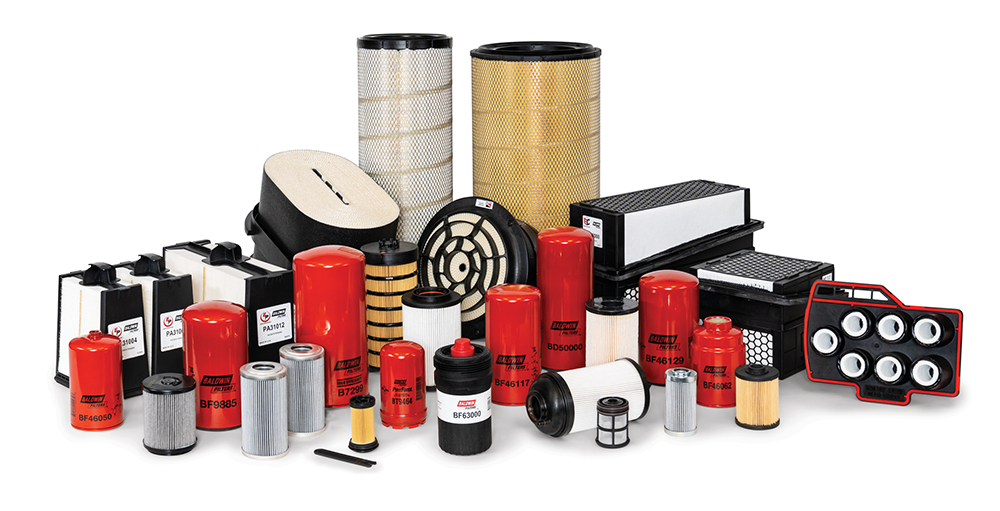
Baldwin Filters goes beyond supplying replacement elements at service time. The company supports a wider protection approach across fuel, lube, hydraulic, air and coolant systems, helping customers manage contamination risk, protect valuable assets and keep equipment working with confidence.
Southern African operators often deal with dust-heavy sites, remote servicing, mixed fleets, onsite fuel handling and pressure to keep production moving. In these environments, dependable filtration helps maintenance teams reduce risk and plan for uptime.
Baldwin brings together several important qualities in industrial maintenance:
• Independently engineered, pre-engineered products
• Filtration designed to meet or exceed OE standards
• Dependable performance and durability
• Broad availability and aftermarket support
• One-stop coverage across key engine and mobile filtration needs
• Local support through its facility in Cape Town, South Africa.
Baldwin is a dependable filtration brand selected by customers who understand that proper protection helps safeguard uptime, productivity and long-term asset value.
A good example of this approach is Baldwin Filters’ BF46296-O fuel filter water separator for Mercedes-Benz trucks from 2011 onwards, designed to support engine protection in demanding operating conditions. The BF46296-O uses multi-layered media to deliver strong water separation performance throughout its service life, while also improving particle removal efficiency across all contaminant sizes. With a longer service life than comparable alternatives, it helps operators and fleet managers reduce service disruption, protect fuel systems and maintain confidence in day-to-day vehicle performance. It is this combination of reliable protection, consistent quality and practical value that reflects the Baldwin approach to filtration.
For users, choosing a trusted filtration partner is part of doing the job properly by protecting expensive equipment, reducing avoidable wear, and making maintenance decisions that stand up over time. Baldwin supports the contamination control, maintenance discipline and operational confidence that are critical for effective plant management.
For more information contact Lisa de Beer, Parker Hannifin SA,
| Tel: | +27 11 961 0700 |
| Fax: | +27 11 392 7213 |
| Email: | [email protected] |
| www: | www.parker.com/za |
| Articles: | More information and articles about Parker Hannifin - Sales Company South Africa |






© Technews Publishing (Pty) Ltd | All Rights Reserved

 printer friendly version