


Servo motors play a crucial role in automated systems since they provide precise control over position, speed and torque. However, without a thorough understanding of the key application parameters, it can be complex to properly select and size a servo motor. In this article, we will highlight some factors to consider in the process of sizing and selecting a servo motor effectively to ensure optimal performance, reliability and energy efficiency.
Factors to consider in servo motor sizing
To select the right servo motor, it is essential to consider the mechanical and dynamic characteristics of the load and the operating environment. The main factors include:
Torque
Torque is one of the important factors for sizing a servo motor. It determines the motor’s capacity to generate the necessary force to move a load. To correctly size the motor, it is essential to calculate the maximum torque required during the operating cycle, including starts, stops and load operations. A suitably sized motor ensures efficient operation, prevents overload and prevents premature failure. It’s vital to select a servo motor whose torque is compatible with the application’s demands, including a safety margin to manage unexpected load peaks.
Speed
Speed is another important factor when selecting a servo motor. It defines how fast the motor can operate, which in turn directly influences cycle time and machine productivity. When sizing a servo motor, the maximum speed required by the application should also be considered, including variations across different phases of the work cycle. With the correct speed specification, the motor will meet operational requirements without exceeding its limits, which could result in accelerated wear or failure.
Inertia ratio
The inertia of the load affects the system’s ability to accelerate and decelerate efficiently. The ratio between the inertia of the motor and that of the load should be optimised to ensure quick responses and precise control. Imagine trying to pull a heavy load using an elastic band versus using a steel rope. A significant difference between these inertias can lead to inadequate motion control, increasing the risk of vibrations and instability. It is therefore essential to calculate the system’s total inertia and select a motor with a compatible inertia to ensure optimised performance.
Supply voltage
Voltage is a crucial consideration when selecting servo motors and their servo drives. It determines the electrical compatibility between the motor and the power grid or power supply. Selecting a servo motor with the appropriate voltage is fundamental to avoiding electrical overloads and ensuring efficient operation. It is important that the servo motor’s voltage matches the control system and power source, thus maximising energy efficiency and minimising the risk of damaging the motor.
Current
Current plays a vital role in the operation of servo motors as it directly affects torque and power. When selecting a servo motor, assessing the maximum current required by the motor during operation is a must. Choosing a servo drive that can deliver the required current without exceeding limits is crucial to prevent the motor from overheating and ensure safe, reliable operation. The appropriate current allows optimal motor performance and supplies the required torque for the application.
Temperature
Temperature management is an essential mechanical and electrical consideration when selecting servo motors. Motors generate heat during operation, and the ability to dissipate that heat affects their efficiency and lifespan. Choosing a servo motor and servo drive with good thermal characteristics will allow for the temperature to be maintained within safe limits. This means that the operating environment, available ventilation or cooling, and the thermal efficiency of the motor and driver need to be considered as well to avoid overheating and ensure stable performance. Variations in operating temperature can adversely impact servo motor performance, leading to derating and limiting available power.
Power
The power of the servo motor is determined by the combination of voltage and current and is an indicator of the motor’s capacity to carry out work. When selecting a servo motor, it is crucial to choose one with the appropriate power for the application. Otherwise, it may exceed its capacity and fail to perform the required tasks. Selecting a compatible servo drive capable of delivering the necessary power to the motor without inefficiencies is equally fundamental to optimising system performance and energy efficiency.
Servo drive and communication network
Another aspect that determines the efficient performance of a servo motor is the servo drive and communication network. The servo drive should be able to translate control commands into precise motor actions. At the same time, the communication network should be able to quickly and reliably transfer data between the motor, driver and the control system (PLC). Compatibility between these components is crucial for designing a cohesive motion control system that can effectively respond to operational demands, providing precision, efficiency and flexibility in industrial automation. Integrating into higher-order control systems should be seamless, fast and as painless as possible.
Meet the new stainless-steel motor EMMH-AS
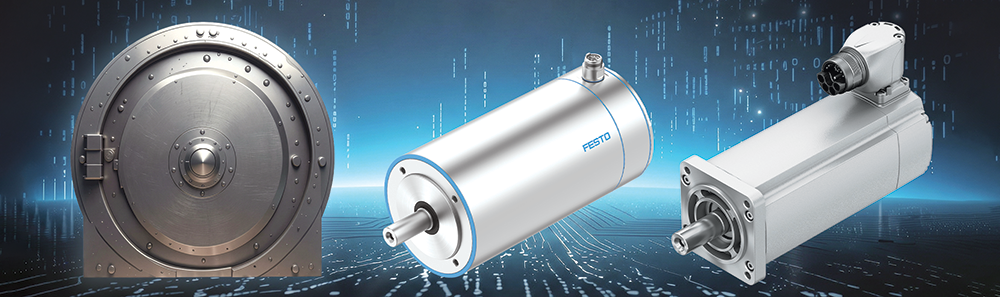
The EMMH-AS, a new stainless-steel servo motor with a clean design, is the ideal solution for the most challenging environmental conditions. It is hygienic, sturdy and compact, making it perfect for the food, pharmaceutical and packaging industries. The EMMH-AS is a brushless stainless-steel servo motor in a clean design for use in particularly hygiene-critical areas. It can be used in contact with food thanks to the housing made of 1,4404/316L stainless steel, with protection class IP69K.
EMMH-AS stainless-steel servo motor highlights include:
• Hygienic series for the most challenging environmental conditions.
• One cable plug with integrated pressure compensation tubing.
• Suitable for contact with food.
• Stainless-steel housing made from 1,4404/316L.
• Easy-to-clean, clean design.
• Maximum corrosion resistance.
• Digital absolute displacement encoder, multi-turn, without battery.
• Four sizes, two lengths, optional holding brake.
Choosing the correct servo motor starts with a thorough understanding of your application’s load, torque, speed and environmental requirements. By carefully considering these factors and adhering to best practices in sizing and selection, you can secure a servo motor that delivers accurate, efficient and reliable motion control tailored to your system’s needs. Are you ready to integrate a servo motor into your system? Visit the Festo website, and under Engineering Tools, select the Electric Motion Sizing configurator to quickly, easily and precisely size your electric and electromechanical drive system.
For more information contact Festo South Africa,
| Email: | [email protected] |
| www: | www.festo.co.za |
| Articles: | More information and articles about Festo South Africa |






© Technews Publishing (Pty) Ltd | All Rights Reserved

 printer friendly version