


Pneumatic systems & components


High flying high pneumatics

First Quarter 2006 Pneumatic systems & components

South African pneumatics specialist, Festo, has taken on the project of designing a pulley tensioning device for a Magni Gyro autogyro.

Festo was approached to develop and install a replacement device for a manually activated jockey pulley tensioning device on the autogyro. The tensioning device provides tension between two fan belts running on a set of pulleys leading from the crankshaft to the top rotor starting pulley. During start up the top rotor is brought into motion with the aid of engine power. After this initial start up, the forward motion of the autogyro keeps the rotor in motion and acts as a 'wing' to keep the autogyro in the air. The factory-fitted device comprised a lever similar to those used on a bicycle brake connected to a cable leading to the jockey pulley tensioning device. A solution was required that enabled the pilot to control this start up procedure via a switch located on the steering stick.
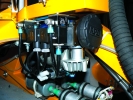
Figure 1. Air is delivered to the 16 mm diameter standard cylinder causing a slow pulling action

According to Bruce Rainbird, Festo internal sales, this was accomplished using pneumatic control.

"The operational control was the most challenging to design into the tensioning device as progressive tension on an incremental basis was required in order to ensure a smooth as well as incremental transfer of power to the main rotor pulley. Once the main rotor was at a desired speed, the power transmission (tension on v-belts) had to be immediately released that is, slow incremental and controlled tensioning with a spring return."

Figure 2. Festo utilised a normally open solenoid valve, normally closed solenoid valve, 16 mm diameter standard cylinder, non return valve, and one-way flow control valve as the main components of the design

Festo used a normally open solenoid valve, normally closed solenoid valve, 16 mm diameter standard cylinder, non return valve, and one-way flow control valve as the main components of the design. Rainbird explains: "As soon as power is delivered to the system, the normally open valve would close allowing air-pressure from the pilot side of the non return valve to fall away ensuring air-flow in only one direction. By activating the normally closed valve (toggle switch), air is delivered via the one way flow control valve and the non return valve to the cylinder causing a slow pulling action."

If the toggle switch is released, air delivery is stopped and the piston position is retained by the non return valve. If more tensioning is needed the toggle switch is activated and air delivered to the cylinder. On completion of the start up procedure, the power to the system is switched off, the normally open solenoid returns to open and pressure is delivered to the pilot side of the non return valve allowing air to escape from the cylinder at a rapid rate ensuring the 'spring return'.

A major safety benefit from the switching off on de-activation is that the procedure cannot be activated in flight thus avoiding any possible damage.

For more information contact Festo, +27 (0) 11 971 5560, [email protected]

An autogyro is so named because it is an aircraft that derives its lift from an un-powered main rotor that windmills freely under autorotation. To climb, or remain aloft, the autogyro is most often thrust forward by means of a pusher propeller at the rear of the machine. To shorten the take-off run, some autogyros are equipped with a pre-rotation mechanism that allows power from the pusher-engine to be used to get the main rotor up to speed before commencing the takeoff run. On a more trivial note, just as aeroplanes are called 'airplanes' by some folk, autogyros are also called 'gyrocopters', which loses the original derivation by dropping the 'auto' - Ed.


Credit(s)


Share this article:
Share via emailShare via LinkedInPrint this page

Further reading:

Achieving clean and dry compressed air for faultless operation
Artic Driers International Pneumatic systems & components
Compressed air is an expensive source of motive power so it makes good sense to supply clean, dry compressed air to your distribution system.

Read more...
A technological leap with the proportional valve terminal
Festo South Africa Editor's Choice
Festo continually makes bold technological leaps to keep pace with global advancements. Controlled Pneumatics is redefining the boundaries of compressed air technology to meet the demands of today’s most advanced applications.

Read more...
Controlling pneumatics via IO-Link
ifm - South Africa Pneumatic systems & components
Pneumatic airboxes control cylinders or actuators using compressed air, and are found in a wide range of industrial applications.

Read more...
The role of analogue gauges in a digital world
SA Gauge Pneumatic systems & components
With so much focus on digital systems, remote monitoring and automation, it’s easy to assume that traditional analogue gauges are outdated. Yet in almost any plant, mine or processing facility, you’ll still find them in daily use. There’s a good reason for this.

Read more...
It’s full steam ahead for SKF’s sustainable leak detection solution
SKF South Africa Pneumatic systems & components
One of SKF’s key customers based in Cape Town, which depends on steam systems for its production processes, was facing costly challenges related to high energy consumption and excessive maintenance hours. SKF recommended the TKSU 10 ultrasonic leak detector as a more streamlined, user-friendly alternative.

Read more...
Dynamic compressor control system with energy savings
Pneumatic systems & components
CompAir has launched Ecoplant, a dynamic, compressed air management solution that adjusts compressor parameters in real time, offering up to 30 per cent reductions in energy costs and CO2 emissions.

Read more...
Is your compressed air system sustainable?
Artic Driers International Pneumatic systems & components
We are all aware that compressed air is an expensive source of motive power, but do we actually know what the cost is?

Read more...
Reliable, flexible and cost-effective rental compressed air
Pneumatic systems & components
More businesses are turning to Integrated Air Solutions for rented on-demand compressed air, without the burden of capital expenditure.

Read more...
It’s full steam ahead for SKF’s sustainable leak detection solution
SKF South Africa Pneumatic systems & components
One of SKF’s key customers based in Cape Town, which depends on steam systems for its production processes, was facing costly challenges related to high energy consumption and excessive maintenance hours. SKF recommended the TKSU 10 ultrasonic leak detector as a more streamlined, user-friendly alternative.

Read more...
A guide for compressed air dryer selection
Artic Driers International Pneumatic systems & components
Clean and dry compressed air is essential in today’s modern operating environment. Without an air dryer and filter bank in line, the downtime created by condensate can be substantial. However, there are issues about air dryer selection and the impact of geographic location that need careful consideration prior to placing an order.

Read more...


While every effort has been made to ensure the accuracy of the information contained herein, the publisher and its agents cannot be held responsible for any errors contained, or any loss incurred as a result. Articles published do not necessarily reflect the views of the publishers. The editor reserves the right to alter or cut copy. Articles submitted are deemed to have been cleared for publication. Advertisements and company contact details are published as provided by the advertiser. Technews Publishing (Pty) Ltd cannot be held responsible for the accuracy or veracity of supplied material.


© Technews Publishing (Pty) Ltd | All Rights Reserved