Hydraulic pitch control for wind turbines
2nd Quarter 2012
Hydraulic systems & components
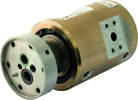
Generating steady shaft speed on a wind turbine means constantly adjusting the pitch of each blade to accommodate wind variations. The blades connect to a huge hub mounted to a shaft that turns a gearbox and a generator. Best turbine efficiency calls for a continuous pitch control on the blades. Blade pitch is powered by either an electric or hydraulic drive. Electrical pitch control uses slip rings to conduct power to large powerful motors rotating in the hub, which require reliable battery backup. Hydraulic systems, on the other hand, use a rotary union to deliver hydraulic power to the drive motor. The advantage of hydraulic control is that its power density is higher than electrical equipment and it needs fewer components, making for a simpler system and lower wear on moving components.
The most important part of the hydraulic unit is the high pressure rotating union allowing the hydraulic liquid to be pumped from the stationary pressure accumulator into the rotating hub to reach the adjustment cylinders. The requirements for this small component are extremely high: it must safely seal the static part from the rotating part; it must guide the hydraulic medium in a safe manner; it must be installed easily; it must be made of materials which can resist adverse environmental conditions; and it must have a long service life, even with contamination of the medium.
Rotating unions from Deublin, the market leader in this field, meet these requirements. They are based on a hydrostatic sealing principle with controlled bypass flow to ensure that the sealing faces are lubricated on a permanent basis, a feature contributing to durability. They are available in single- to multi-channel designs and, depending on the model, generate up to 250 bar hydraulic pressure, as well as having a central channel for sensor technology or connection to a slip ring. Furthermore hydraulic systems equipped with a Deublin rotating union are secured against oil leakage, so there are no environmental implications.
For more information contact Mike Vernes, Pneumatic Electric Control Systems (PECS), +27 (0)31 303 3701, [email protected], www.pecspower.co.za
Further reading:
From question to innovation
Axiom Hydraulics
Hydraulic systems & components
A field question sparked the journey toward a safer solution. When a simple inquiry, “What about the Hilux?”, posed a challenge, it ignited the innovative spirit at Axiom Hydraulics.
Read more...
The ultimate asset protection
CT Hydraulics (Nqoba)
Hydraulic systems & components
Prioritising the prevention of hydraulic fluid contamination is the single most effective way to eliminate the presence of microscopic debris introduced during hose assembly, repairs, or maintenance.
Read more...
Axial piston pump series for next-gen hydraulic applications
Hydraulic systems & components
Moog has launched its new AXP Axial Piston Pump Series, a next-generation hydraulic solution engineered to deliver optimal performance, reliability and cost efficiency for industrial applications.
Read more...
Identifying signs of hydraulic cylinder wear and tear
CT Hydraulics (Nqoba)
Hydraulic systems & components
Recognising the early warning signs of hydraulic cylinder degradation is crucial for preventing costly downtime, ensuring operator safety and maximising the lifespan of your hydraulic systems.
Read more...
How laser cladding delivers 33% more life and maximum ROI in hydraulic cylinders
Hydraulic systems & components
By utilising advanced laser cladding, Honingcraft can help clients achieve a 33% longer life from their components, ensuring they secure the maximum return on their investment.
Read more...
Filtration as a reliability driver in motion control systems
Parker Hannifin - Sales Company South Africa
Hydraulic systems & components
This article highlights the importance of filtration in motion control systems, how contamination affects performance, and what fleet managers, operators and maintenance teams in southern Africa can do to reduce downtime, avoidable wear and costly repairs, aided by Baldwin Filters.
Read more...
Tuning into what your system is telling you
Hydrasales
Hydraulic systems & components
Hydraulic presses can run like clockwork, but often it’s the things you don’t see, or hear, that carry the most telling signs of irregular system health.
Read more...
A guide to common hydraulic system contaminants
CT Hydraulics (Nqoba)
Editor's Choice Hydraulic systems & components
Every engineer, machine designer and maintenance professional understands that the heart of any reliable hydraulic system is its fluid. But the moment that fluid is compromised, your system’s life expectancy and your peace of mind drop dramatically.
Read more...
Making lines safer with smarter connection
Hydrasales
Hydraulic systems & components
Imagine connecting multiple hydraulic lines or a combination of hydraulic, electrical and grease lines with one single, confident movement. That’s the everyday convenience operators get from Faster’s MultiFaster multi-coupling systems.
Read more...
Hydraulic system upgrades to boost performance and save money
CT Hydraulics (Nqoba)
Hydraulic systems & components
Those working with hydraulic or pneumatic systems know that keeping your machinery running at peak performance balances productivity and cost. As systems age, they often become less efficient, requiring more energy and more frequent repairs. The good news is that you don’t always need to invest in an entirely new machine to solve these problems.
Read more...









 printer friendly version