


Hydraulic systems & components


The seven different types of hydraulic fittings used for cylinders

Second Quarter 2025 Hydraulic systems & components

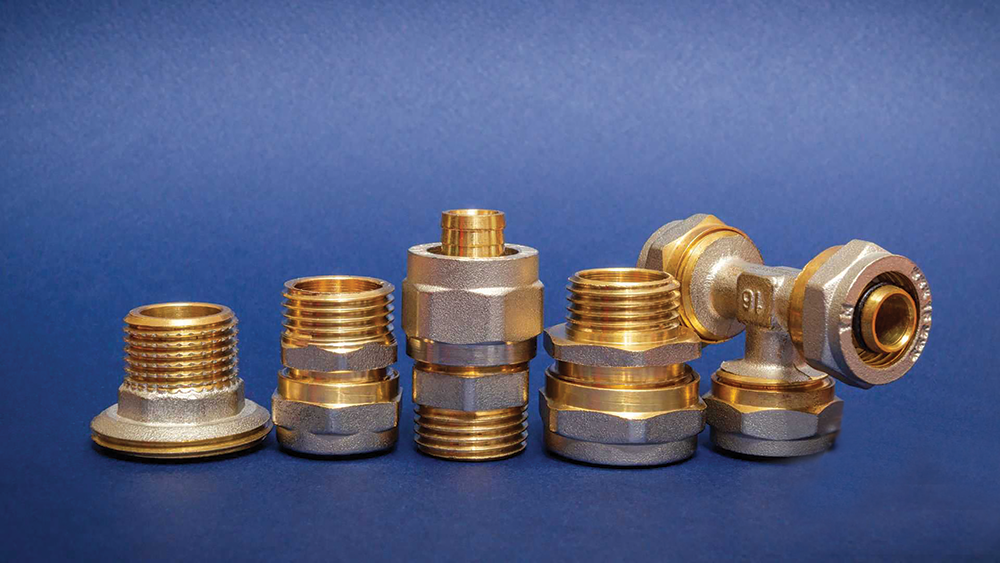
Hydraulic fittings serve as connectors within a hydraulic system, ensuring seamless fluid transmission under high pressure. These fittings are crucial for maintaining the integrity of hydraulic circuits, preventing leaks and enabling efficient operation across various industrial applications. A well-chosen fitting can significantly reduce system failures, prolong component lifespan and improve overall performance. Selecting the right type of hydraulic fitting is not only essential for preventing leaks, but also for ensuring minimal downtime and enhancing overall system efficiency. Proper fittings also contribute to safety by preventing accidental disconnections and reducing risks associated with high-pressure fluid leaks.

The main types of hydraulic fittings

Threaded fittings: These are among the most common types used in hydraulic systems and come in various thread types, including:

National Pipe Thread (NPT): Most common in North America, this is known for its tapered threads that create a tight seal.

British Standard Pipe (BSP): Found in European and international applications.

Joint Industry Council (JIC): Features a 37-degree flare for leak-free performance.

Society of Automotive Engineers (SAE): Designed for high-pressure hydraulic applications.

O-ring face seal (ORFS) fittings: These type fittings provide a secure, leak-proof connection by using an O-ring between the sealing surfaces. They are ideal for high-pressure applications and are resistant to vibration and thermal expansion

Flare fittings: These fittings are designed with a flared tube end that mates with a corresponding fitting. They are widely used in high-pressure hydraulic systems and provide excellent resistance to leaks.

Compression fittings: These consist of a compression nut and ferrule that create a tight seal around the tubing, and are used for medium-pressure applications to provide a reliable connection without requiring welding or flaring.

Quick-connect fittings: These allow for easy and fast connection/disconnection without tools. They are commonly used in systems that require frequent assembly and disassembly, such as mobile hydraulic equipment.

Flange fittings: These are used for high-pressure applications, providing a strong and secure connection. They are commonly found in industrial and heavy-duty hydraulic systems

Barbed fittings: These are designed for use with flexible hoses where the barbs grip the inner diameter of the hose to create a secure seal. They are easy to install and commonly used in low-pressure applications.

Comparison of hydraulic fitting types

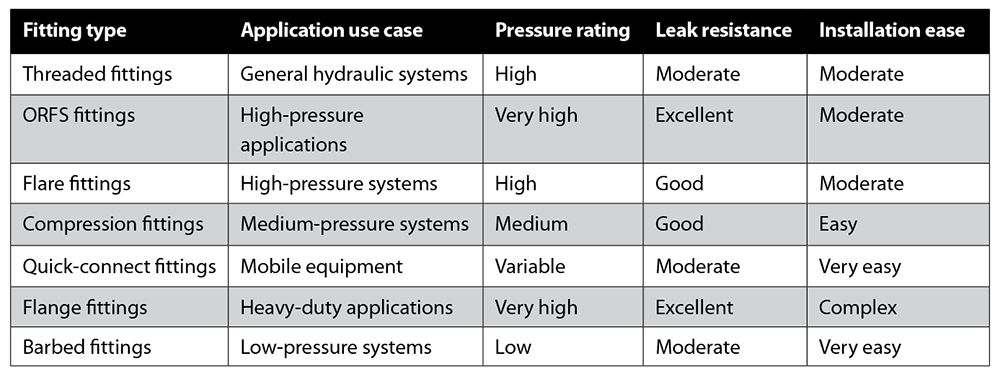
To help you choose the right fitting for your application, here’s a comparison of the different types of hydraulic fittings:
Choosing the right hydraulic fitting

When selecting the right hydraulic fitting, consider the following factors:

• Pressure requirements: Choose a fitting that matches the pressure rating of your system.

• Environmental conditions: Consider exposure to chemicals, temperature fluctuations, and vibration.

• Compatibility: Ensure the fitting is compatible with your hydraulic fluid and other system components.

• Ease of installation: Some fittings require specialised tools or expertise for proper installation.

• Cost vs performance: Balance affordability with durability and performance requirements.

Conclusion

Choosing the right hydraulic fittings is essential for ensuring the efficiency, safety and longevity of any hydraulic system. Whether you’re working in oil and gas, heavy machinery or construction, selecting high-quality fittings can prevent downtime and costly repairs.

At Honingcraft, we specialise in providing high-quality hydraulic components, including precision-engineered fittings for various industrial applications. If you need expert guidance in selecting the right hydraulic fittings for your system, contact the Honingcraft expert team today. We are ready to assist you with all your hydraulic needs.

Article courtesy of Honingcraft.

For more information contact Honingcraft, +27 11 824 5320, [email protected], www.honingcraft.co.za


Share this article:
Share via emailShare via LinkedInPrint this page

Further reading:

Making lines safer with smarter connection
Hydrasales Hydraulic systems & components
Imagine connecting multiple hydraulic lines or a combination of hydraulic, electrical and grease lines with one single, confident movement. That’s the everyday convenience operators get from Faster’s MultiFaster multi-coupling systems.

Read more...
Hydraulic system upgrades to boost performance and save money
CT Hydraulics (Nqoba) Hydraulic systems & components
Those working with hydraulic or pneumatic systems know that keeping your machinery running at peak performance balances productivity and cost. As systems age, they often become less efficient, requiring more energy and more frequent repairs. The good news is that you don’t always need to invest in an entirely new machine to solve these problems.

Read more...
Navigating ISO standards in hydraulic cylinder manufacturing
Hydraulic systems & components
For hydraulics professionals, understanding and leveraging ISO standards is a powerful way to ensure quality and gain a competitive edge. Here is a guide to the most critical ISO standards for hydraulic cylinder manufacturing, showing how to use them to your advantage.

Read more...
Heavy impact, smart control
Axiom Hydraulics Editor's Choice Hydraulic systems & components
Every now and then a project lands on your desk that’s equal parts heavy machinery and fine control - a tantalising mix for any engineer. A client approached Axiom Hydraulics with a project exactly like this.

Read more...
Axiom expands its hydraulic solutions with Powerstart piston accumulators
Hydraulic systems & components
Axiom is proud to announce a unique partnership with Powerworks, introducing a new generation of piston accumulators into the South African market, the Powerstart piston accumulators.

Read more...
Hydraulic systems in heavy machinery
Hydraulic systems & components
In this article, we explore how hydraulic systems function, their role in powering heavy equipment, and why they are the preferred choice for industries requiring immense power and precision.

Read more...
How manufacturers achieve zero-leakage demands in hydraulic cylinders
Hydraulic systems & components
Imagine a world where your hydraulic cylinders never leaked. The answer lies in a holistic approach that focuses on the fundamental components and their interactions, particularly the cylinder rod and its surrounding environment.

Read more...
The seven different types of hydraulic fittings used for cylinders
Hydraulic systems & components
Hydraulic fittings are crucial for maintaining the integrity of hydraulic circuits, Selecting the right type of hydraulic fitting is not only essential for preventing leaks but also for ensuring minimal downtime and enhancing overall system efficiency.

Read more...
Powering southern Africa’s industrial evolution for over five decades
Editor's Choice Hydraulic systems & components
Established in 1974, Oilpower is a recognised name in South Africa’s hydraulic and pneumatic sector. What started as a small, family-run business has matured into a highly structured operation with specialised teams, experienced engineers and a reputation for technical excellence and reliability. Oilpower is celebrating its 50th anniversary this year.

Read more...
Choosing the right hydraulic cylinder for your application
CT Hydraulics (Nqoba) Hydraulic systems & components
Selecting the appropriate hydraulic cylinder for your specific application involves considering several key factors to ensure optimal performance, efficiency and durability. Here’s a comprehensive guide to help you make an informed decision.

Read more...


While every effort has been made to ensure the accuracy of the information contained herein, the publisher and its agents cannot be held responsible for any errors contained, or any loss incurred as a result. Articles published do not necessarily reflect the views of the publishers. The editor reserves the right to alter or cut copy. Articles submitted are deemed to have been cleared for publication. Advertisements and company contact details are published as provided by the advertiser. Technews Publishing (Pty) Ltd cannot be held responsible for the accuracy or veracity of supplied material.


© Technews Publishing (Pty) Ltd | All Rights Reserved