


The cost of compressed air in South Africa has escalated at an alarming rate over the last two years. The need for compressed air treatment is also escalating as global manufacturing and quality standards are applied in South Africa, allowing us to compete in world markets. Plant managers agree that polluted compressed air escalates leak rates as well as increasing downtime within a plant.
Dirty compressed air increases failure rates in pneumatic systems. Air standards are also an issue for manufacturers of food and pharmaceutical products. The treatment of compressed air begins with the identification of the standard of air treatment that is required for a process. The compressed air treatment chain should provide air at the standard required, with minimal energy wastage, the lowest possible system pressure drop and acceptable secondary aftercare costs. A supply partner should be capable of:
• Advising on the required standard according to ISO 8573
• Specifying the equipment required.
• Supplying the treatment package.
• Designing the piping system.
• Verifying the end result at commissioning stage.
• Monitoring the system for consistent performance.
• Providing 24/7 aftercare support.
The process is not overly complicated, but surprisingly this procedure is rarely followed in South Africa. Constant loss of skilled staff and lack of supplier training and planning often lead to less than satisfactory air treatment results. The selection of a supply chain partner is critical. Review the company, its capabilities and its involvement in the compressed air treatment industry, and ask for references. Package deals may offer a solution, but many air compressor suppliers offer little in the way of aftercare support. Buying a simple dryer from a compressor company may be an option, however bigger and more complicated sets should be sourced from an air treatment specialist. The greater the cost of failure, the greater the effort that should be employed to select a specialist supply chain.
A 160 kW air compressor with only a simple maintenance plan will cost ±R1,6 million a year if operated 24/7/360 and this is only based on R0,84/kWhr. This does not include the cost of installation and purchase. On average, raw untreated compressed air costs around R0,10 to R0,12 /m³.
Once past the installation process it is vital that the compressed air is permanently monitored. Any air treatment equipment malfunction will quickly affect compressed air quality. If a plant is contaminated with water and oil from a faulty air drying system, it takes weeks to dry down to the correct dewpoint again. Filter element failure due to a lack of system monitoring or use of look-alike products can contaminate the compressed air pipe distribution system for life. Oils do not evaporate from a piping system and can lie in a pipe network for years.
CS-iTEC’s CSM2G is a WiFi-enabled air monitoring solution that utilises ZigBee data transmission and allows plant engineers to monitor flow, pressure, dewpoint, oil carryover, particle count, power consumption, water flow and velocity. The CSM2G ensures that compressed air standards are monitored and met continuously, giving plant engineers the assurance that their air systems are meeting international standards.
This cloud-based system is extremely user friendly, with the ability to expand as needs grow. Cloud-based software upgrades are undertaken seamlessly and the cloud data storage ensures security and continuity. Data can be fed simultaneously to the scada system as well as to the engineer’s desktop or laptop. The visual layout on the home page is tailored to mimic the client’s own system. Alarm setpoints are adjustable by the user.
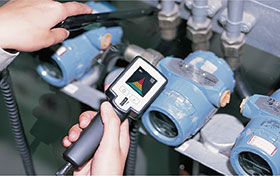
Alternatively, there are simpler, lower cost systems. For example an S331 display data logger can accept multiple probes. It can log data and transmit flow, pressure, temperature, power and dewpoint data to a local computer system via 4 - 20 mA outputs or via Modbus or Profibus.
There are now locally mountable low cost S305 dewpoint plug-and-play systems that allow dryer performance monitoring at a glance. Particle counting and oil carryover monitoring is now available with data downloadable to graphic formats, perfect for users demanding total control of compressed air quality.
For more information contact Allen Cockfield, Artic Driers International, +27 (0)11 420 0274, [email protected], www.articdriers.co.za
| Tel: | +27 11 420 0274 |
| Email: | [email protected] |
| www: | www.articdriers.co.za |
| Articles: | More information and articles about Artic Driers International |






© Technews Publishing (Pty) Ltd | All Rights Reserved

 printer friendly version