


Lifting equipment applied at mining sites is a major Capex expenditure, and one that has to reflect a positive return on investment for mining companies. Preventive maintenance scheduling plays a crucial role in ensuring that the financial and operational costs of crane equipment for a mining operation are valid. Konecranes, a leading supplier of cranes for mining environments, offers customers servicing schedules with online portal access that shows tangible benefits from the implementation of forward-looking maintenance and inspection processes.
“A variety of cranes are used at mining sites, from furnace cranes, slag and coal cranes, underground cranes to basic workshop cranes, and they all need to work efficiently and comply with safety regulations. Additionally, the current economic climate renders downtime of operations a minus on the audit scorecard,” said managing director, Emil Berning. “We at Konecranes are aware that crane equipment needs to fulfil operational requirements to their fullest, and at the safest and most cost-efficient levels, while enhancing the crane’s lifespan. This is why the specialised preventive maintenance and servicing agreements offered by Konecranes are globally respected and deliver the benefits our customers expect.”
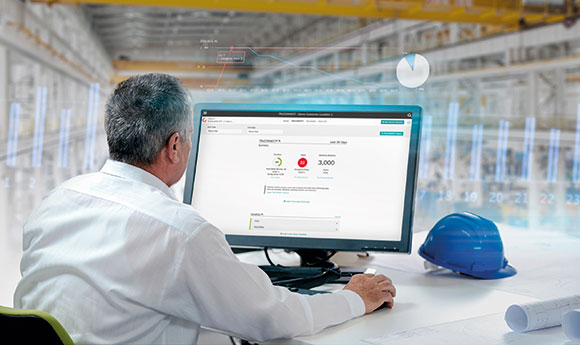
Scheduled preventive crane maintenance and servicing increases the equipment’s output, maintains its efficiency and operational safety, enhances its lifespan and lowers basic running costs. Scheduled servicing and preventive maintenance agreements offer the customer monthly, quarterly and annual servicing and inspections. The results of the inspections are presented in report form to the customer, and the ‘health’ status of their cranes can be viewed via the yourKonecranes online portal. This portal enables customers to see what maintenance has been conducted, and what parts have been serviced or replaced. It lists all data for forthcoming servicing inspections and gives customers a concise and clear overview of crane performance as well as whether operator error has impacted in any way on the crane’s production efficiencies.
Berning added: “Scheduling crane inspections and implementing our recommendations can add between eight to ten years to the lifespan of the crane. There are elements of cranes that have a critical safety impact if they are not inspected regularly, for example braking, gearbox and rope systems. Similarly, if, for example, crane reliability reports show the crane is lifting weights above what it was originally commissioned for, it is important to examine the crane components and assess whether the crane is suitable for additional load performance. The key is to ensure the crane is safe to operate at all times and that its operational components are safety compliant. Safety is everything in crane systems from Konecranes.”
All Konecranes technicians utilise Siebel Light In Mobile (SLIM) devices, a new mobility tool which works online, or offline with synchronisation, that allows service technicians to review service requests and then record their work on their smartphone and review it with the customer. Konecranes servicing is also supported by its Mainman software platform. It provides a more intelligent and responsive customer care offering, and greater visibility to equipment and service history.
Improving the safety and productivity of customers’ operations is the key objective of servicing and preventive maintenance agreements with Konecranes. The company’s Lifecycle Care approach offers customers the highest in lifecycle value, maximising productivity uptime and minimising downtime costs.
A systematic risk and recommendation method of evaluation and consultative planning and review processes not only drives continuous improvement in safety and productivity, but also builds the trust required between the customer and Konecranes technicians.
Inspections and preventive maintenance identify risks and improvement opportunities and support compliance; predictive maintenance utilises condition monitoring, advanced inspections and data analytics to predict component or equipment failure; corrective maintenance and retrofits address safety and productivity issues and capitalise on improvement opportunities; consultation services guide decision making, uncover critical issues and maximise return on investment; modernisation services prolong the economic service life of equipment whilst new equipment and spare parts are on hand for when new equipment is deemed essential.
“At the end of the day, we want our customers to know that their equipment operates cost efficiently, optimally and most importantly of all safely. Servicing and preventive maintenance scheduling is the key to meeting all three of these criteria,” concluded Berning.






© Technews Publishing (Pty) Ltd | All Rights Reserved

 printer friendly version