



Many compressed air users believe that upgrading to a larger air receiver will provide more compressed air and solve all inadequate compressed air supply problems.
With modern technological advances it is principally the compressor that is vital to the performance of a compressed air system, not the air receiver. In the final analysis it is the compressor, not the air receiver, which ultimately governs the available quantity of compressed air output.
Inadequate compressed air supply at point of use can be caused by a number of system faults, but the three most common causes are:
* An undersized compressor.
* Pressure drops associated with the compressed air reticulation pipework.
* Intermittent compressed air demand spikes.
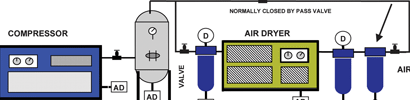
Right-sizing the compressor
A genuine lack of compressed air being produced can be the obvious cause of inadequate compressed air supply. If so, the problem can be easily diagnosed at the heart of the operation: the compressor.
As a rule of thumb, a compressor struggling or unable to maintain its minimum design pressure output for at least one minute can be considered too small to meet the compressed air demands of the particular application and will cause unnecessary energy consumption. An air receiver will not overcome this inadequacy and installing an additional compressor in parallel with the undersized compressor is also no longer the best solution.
Replacing the existing compressor with a larger one will increase the compressed air output. However, modern technological advances have expanded the possibilities and today there are other ways of increasing air output capacity efficiently and effectively while simultaneously saving up to 30% in energy consumption.
Reticulation design
Frequently the design of the compressed air reticulation pipework, crucial to the performance of the compressor, is considered less important than the compressor itself. When the reticulation system is poorly designed users experience a drop in pressure between the compressor output and the point of use, resulting in a diminished compressed air supply. While some pipework induced pressure drop is expected, significant and sustained drops in pressure in healthy compressed air systems are uncommon and should be investigated. A pressure drop is often the result of undersized pipework. A more cost-effective solution to this problem is to upgrade to larger reticulation pipework: not to install more compressors or increase air receiver capacity, which is effectively energy stored and potentially wasted.
Peak demand
Finally, inadequate compressed air supply can be a direct result of temporary spikes in compressed air demand during peak periods of operation and start-up. In this case an air receiver may indeed provide a ‘buffer’ solution at the point of use; temporarily enabling the compressed air system to satisfy the increased compressed air demand.
Compressed air specialists will agree that this solution is limited to very few applications today due to the efficiency of modern compressors and their associated management systems.
Conclusions
* It is the compressor and its designed operating protocol, not an air receiver, which ultimately dictates the compressed air system supply capabilities.
* A compressor controlled via a pressure switch or transducer signal only is no longer sufficient or conducive to energy saving unless combined with a VSD (variable speed drive) or compressor management system.
* Introducing a larger air receiver does not enable the compressed air system to satisfy increased compressed air demand.
* The problem may be alleviated by the introduction of a VSD or computerised compressor management system.
* The installation of an air receiver in large industrial applications is no longer a solution and is an unnecessary expense.
* It is essential that the compressor(s) and associated pipework are designed and sized adequately to satisfy the compressed air requirements of the particular application.
* The right compressed air solution can only be determined through mains air analyses in order to recognise the true character of a compressed air plant.
Arthur Rushmer Engineering provides a mains air analysis service that can help users identify the root cause(s) of inadequate air and recommend potential solutions.
For more information contact Kevin Rushmer, Arthur Rushmer Engineering, +27 (0)11 908 4169, [email protected], www.are.co.za






© Technews Publishing (Pty) Ltd | All Rights Reserved

 printer friendly version